The entrance is easy to miss. A carved wooden door set into a colonial facade on a quiet street in Cartagena's historic walled city, unremarkable until it opens. Beyond it, Casa San Agustín reveals itself slowly: a sequence of interconnected houses dating to the seventeenth century, their thick stone walls and original aqueduct now folded into one of the most considered boutique hotels in South America. Three restored colonial buildings frame interior courtyards where bougainvillea climbs weathered columns and light pools across terra-cotta tile. The architecture carries the weight of centuries without performing it. Exposed original stonework, hand-painted tiles, and wooden beams sit alongside contemporary furnishings and modern art, creating rooms that feel both anchored and alive.
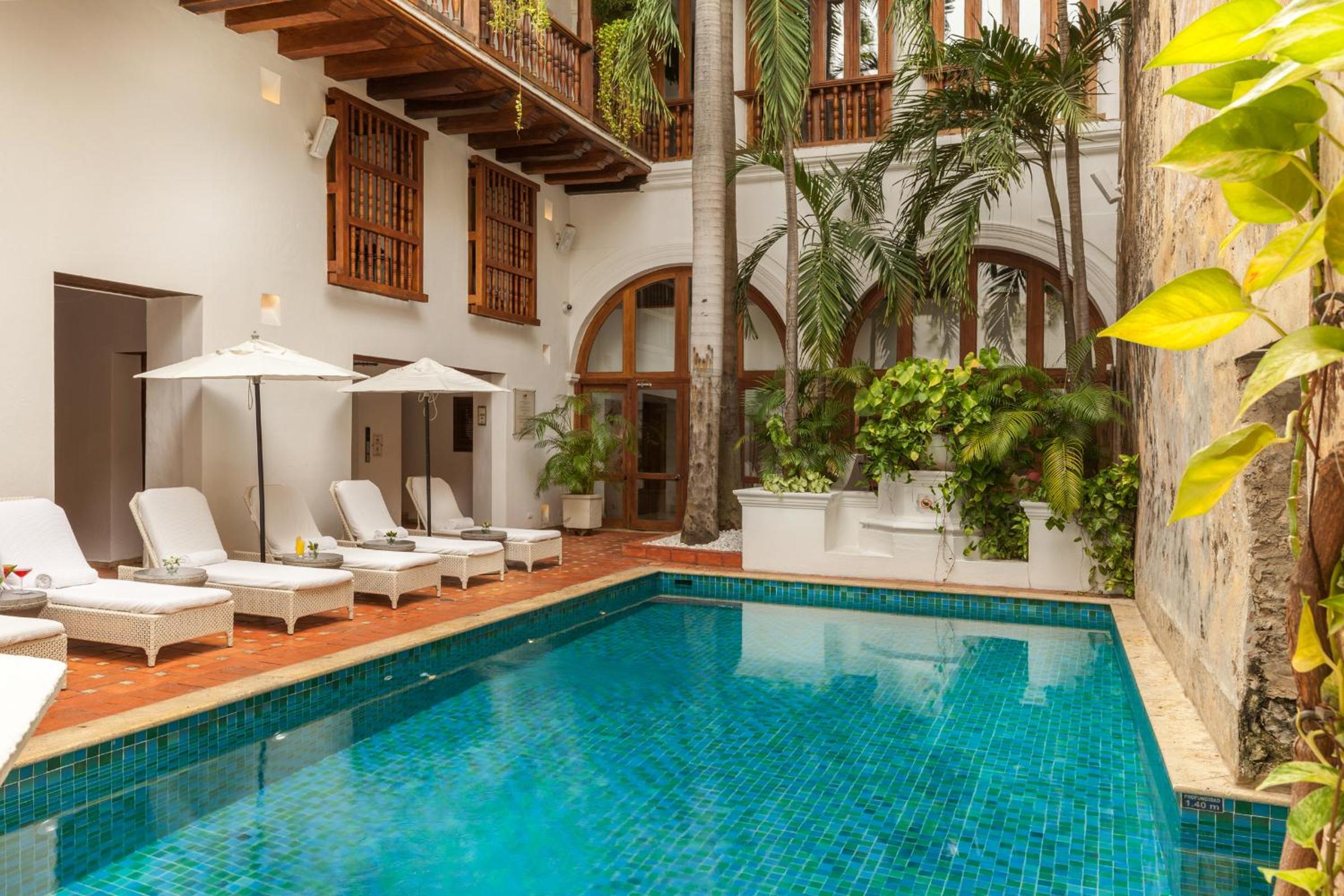
The hotel's thirty rooms and suites are distributed across the three heritage houses, each one shaped by the idiosyncrasies of the original structures. Ceilings soar overhead, thick walls keep the tropical heat at bay, and interiors balance colonial character with crisp, modern comfort. Some rooms open directly onto the courtyards, while others look out over the rooftops and church towers of the Old City. The library, lined with volumes on Colombian art, architecture, and history, doubles as a quiet retreat away from the midday sun. At the heart of the property, the courtyard pool offers a rare pocket of stillness within the walled city, its water catching fragments of sky between the surrounding facades. The spa draws on local ingredients and traditions, providing treatments designed around the rhythms of the Caribbean coast.
Alma, the hotel's restaurant, occupies a vaulted space beneath the original aqueduct, its stone arches setting the stage for a menu rooted in Colombian and Caribbean flavors. Dining here feels intimate rather than formal, with dishes that reflect the coastal ingredients and culinary traditions of the region. The courtyard bar extends the experience outdoors, where cocktails arrive alongside the sound of fountains and the fading warmth of early evening. Breakfast unfolds at a slower pace, set among the courtyards where the morning light is at its most forgiving.
Casa San Agustín sits within Cartagena's UNESCO World Heritage walled city, steps from the churches, plazas, and narrow streets that have defined this Caribbean port for nearly five hundred years. The neighborhood unfolds on foot: Plaza Santo Domingo, the Palacio de la Inquisición, and the ramparts of the old city walls are all within a short walk. Yet the hotel's interior courtyards create a distance from the energy of the streets that feels almost improbable. What lingers is not grandeur but proportion. The scale of the rooms, the temperature of the stone, the way the courtyards hold both silence and warmth. It is a place shaped by time rather than trend, where the architecture does most of the speaking.