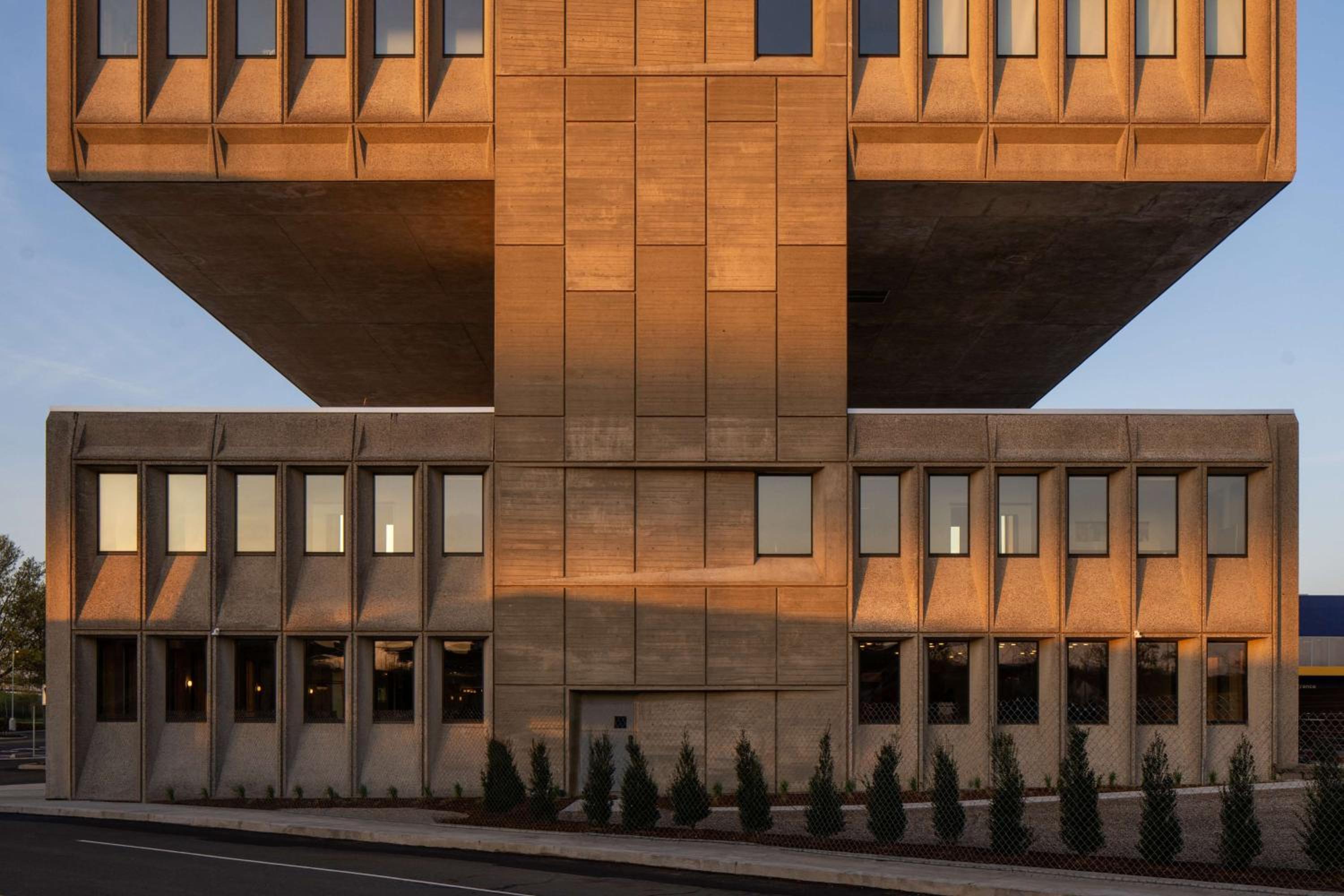
The building announces itself before you reach the door. A monumental concrete form rises from the edge of Long Wharf, its deeply sculpted facade of repeating geometric bays unmistakable as the work of Marcel Breuer, the Bauhaus-trained architect whose mid-century vision shaped some of America's most striking institutional buildings. Originally designed in 1970 as the headquarters of the Armstrong Rubber Company, this Brutalist landmark in New Haven, Connecticut sat vacant for years before its transformation into Hotel Marcel, a 165-room property that holds the distinction of being the first net-zero energy hotel in the United States. The conversion, led by developer and hotelier Bruce Becker, preserved Breuer's bold structural vocabulary while threading sustainability into every layer of the guest experience. Over 100,000 square feet of original concrete were restored. Solar panels now crown the rooftop. The interiors draw from a mid-century palette that honors the building's architectural DNA without resorting to nostalgia.
Rooms and suites are designed with clean, considered lines and outfitted with furnishings that reference the Bauhaus lineage of their setting. Floor-to-ceiling windows frame views of Long Island Sound or the New Haven skyline, and the material choices throughout favor durability and environmental responsibility alongside comfort. Electric vehicle charging stations sit in the parking area, and the building's geothermal heating and cooling system operates quietly beneath the surface. Nothing about the sustainability agenda feels like compromise. It simply becomes part of the texture of staying here.
On the ground floor, the restaurant and bar serve as a social anchor for both hotel guests and locals. The dining concept leans into seasonal, locally driven menus in a space that feels like a natural extension of the lobby's mid-century aesthetic. A landscaped courtyard offers an outdoor gathering point in warmer months, softening the monumental concrete with greenery and open air. Meeting and event spaces throughout the property take advantage of the building's dramatic proportions, with soaring ceilings and generous natural light.
New Haven provides a layered destination context that extends well beyond the Yale University campus. The city's renowned pizza heritage, its vibrant arts scene anchored by institutions like the Yale Center for British Art and the Beinecke Rare Book and Manuscript Library, and its position along the Connecticut coastline all contribute to a sense of cultural density unusual for a city of its size. Hotel Marcel sits slightly apart from the downtown core, closer to the waterfront, giving it a sense of independence from the bustle while remaining minutes from the city's cultural and culinary landmarks.
What lingers after a stay at Hotel Marcel is the rare feeling that ambition and restraint can coexist. Breuer's architecture was never meant to whisper, and the building still commands attention with its sculptural mass and unapologetic concrete presence. But the life inside it now operates with a kind of purposeful calm, where design, sustainability, and hospitality align without any one element shouting over the others.