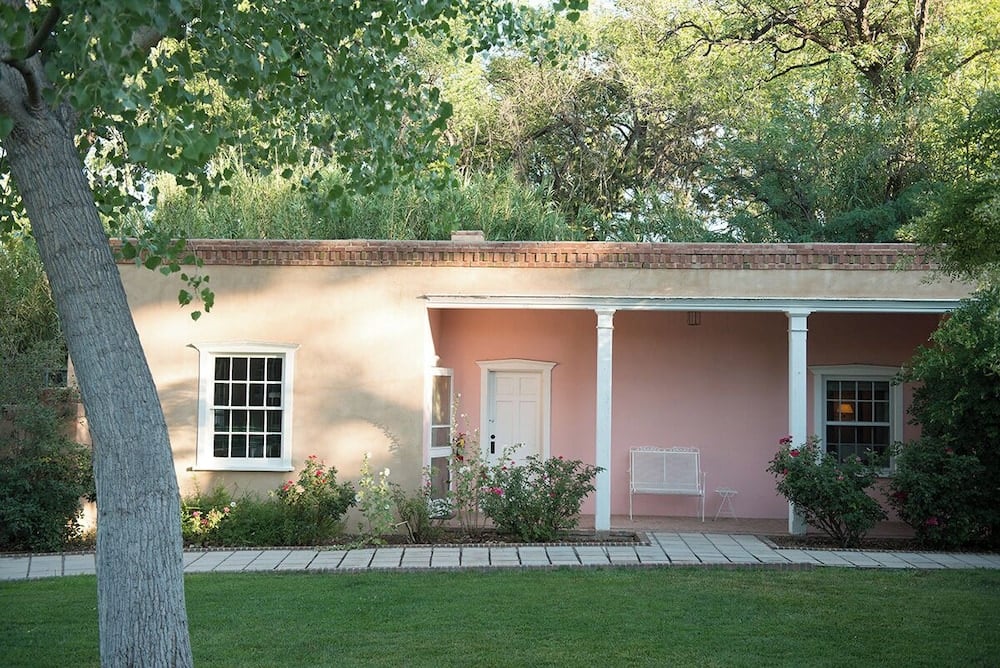
You arrive along a cottonwood-lined drive, the Sandia Mountains rising to the east and the scent of lavender catching the air before you've even stepped out of the car. Los Poblanos Historic Inn & Organic Farm occupies 25 acres of working farmland in the Rio Grande Valley, a property rooted in the 1930s vision of architect John Gaw Meem, whose signature Territorial Revival style defines the adobe structures here. The buildings feel both monumental and intimate, their hand-plastered walls, carved wooden beams, and viga ceilings carrying the warmth of nearly a century of New Mexican craft. Gardens designed by Rose Greely, one of the first licensed female landscape architects in America, still shape the grounds, weaving formal hedgerows and perennial borders between ancient cottonwoods.
Accommodations span historic rooms in the original ranch buildings and newer farm-style guest rooms, each distinctly furnished with regional artwork, handwoven textiles, and custom bath products made from the property's own lavender harvest. Some rooms open directly onto private portals overlooking the gardens or fields, while others sit within the quieter edges of the compound near the bosque. The Farm Shop anchors the guest experience with Los Poblanos-branded goods, from lavender soaps and salves to pantry items sourced from the on-site organic farm. Campo, the property's restaurant, draws directly from this harvest, building seasonal menus around what grows just steps from the kitchen. Breakfast, included for overnight guests, showcases the same farm-driven ethos with dishes built on house-made granola, farm eggs, and freshly baked pastries.
The property's 25 acres encourage slow, unhurried days. Walking paths wind through lavender fields, heritage fruit orchards, and the Rio Grande bosque, a riparian cottonwood forest that borders the western edge of the farm. A seasonal pool and hot tub sit within the gardens, and the on-site fitness studio and yoga programming offer quieter modes of restoration. The cultural weight of Albuquerque is close, with Old Town, the Indian Pueblo Cultural Center, and the city's growing gallery scene all within a short drive. The Sandia Peak Tramway and the Petroglyph National Monument sit nearby, anchoring the property within a landscape shaped by centuries of Indigenous, Spanish, and Anglo settlement.
What stays with you at Los Poblanos is the rare coherence of the place. The lavender in your bath products was grown in the field outside your window. The greens on your plate were harvested that morning from the same soil you walked through after breakfast. The architecture holds its age honestly, and the land operates with genuine agricultural purpose rather than aesthetic performance. It is a property where heritage and daily rhythm have never been separated, and where the stillness of the valley settles into your pace long before you're ready to leave.