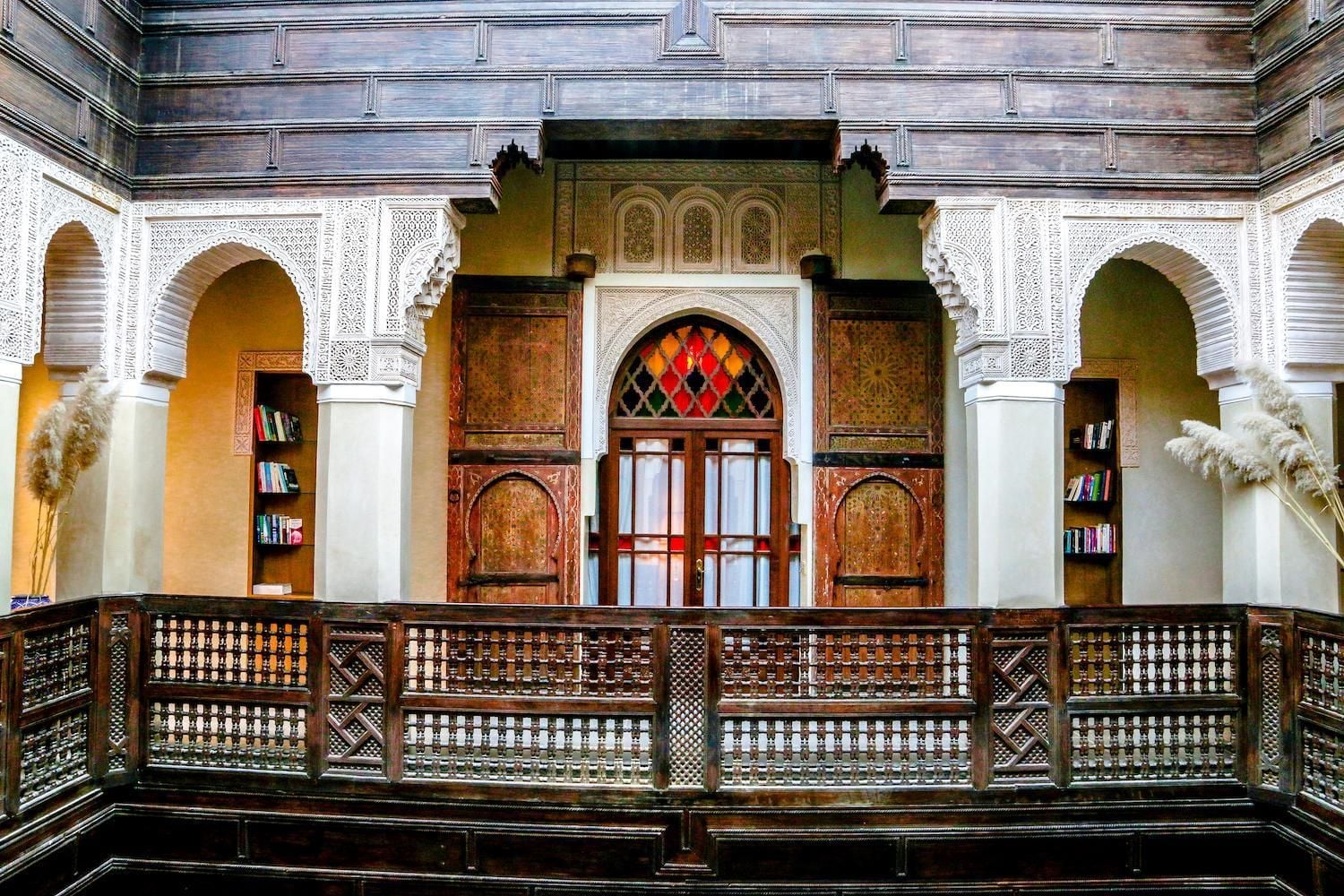
You enter through an unmarked door in the labyrinthine streets of the Fès medina, and within a few steps the city's clamor falls away entirely. What opens before you is not a hotel lobby but a courtyard of almost theatrical beauty: carved cedar, hand-cut zellij tilework in geometric blues and greens, the murmur of a central fountain, and daylight filtering through Andalusian arches. Riad Fès is a restored palace that traces its architecture to the 14th century, its bones drawn from the same artistic traditions that shaped the medina itself. The scale is intimate but the ambition is grand, a property that carries the weight of centuries without feeling museum-like.
The hotel's 21 rooms and suites are arranged across two interconnected riads, each distinct in character. Interiors layer traditional Moroccan craftsmanship with contemporary comforts: thick brocade fabrics, brass lanterns, sculpted plaster walls, and marble bathrooms. Some suites open onto private terraces or look inward to the courtyard below, while others face the rooftops of the medina, offering views that stretch toward the minarets and hillsides beyond. The Riad Fès Bar Maure, set on the rooftop terrace, is among the most atmospheric spots in the city, a place where mint tea and cocktails arrive against a panorama of the old city at golden hour.
Dining here draws from the deep culinary heritage of Fès, often called the gastronomic capital of Morocco. The hotel's restaurant serves refined Moroccan cuisine in a setting of candlelit courtyards and intricately tiled dining rooms, with dishes built around slow-cooked tagines, pastilla, and seasonal preparations rooted in local tradition. Below ground, a traditional hammam and spa offer a sequence of steam, scrub, and massage rituals in a vaulted stone space that feels unchanged by time. An indoor pool sits nearby, its mosaic-lined basin offering quiet refuge between excursions.
The medina of Fès el-Bali, a UNESCO World Heritage site, unfolds just outside the door. It is one of the world's largest car-free urban areas, a living maze of souks, tanneries, mosques, and madrasas dating back more than a thousand years. The hotel arranges guided tours through these ancient quarters, from the leather dyeing pits of Chouara to the ornate halls of the Bou Inania Medersa. Yet there is something particular about returning to Riad Fès after hours spent navigating the medina's intensity. The courtyard quiets, the fountain resumes its rhythm, and the city's vast, layered history distills into something personal and close at hand.