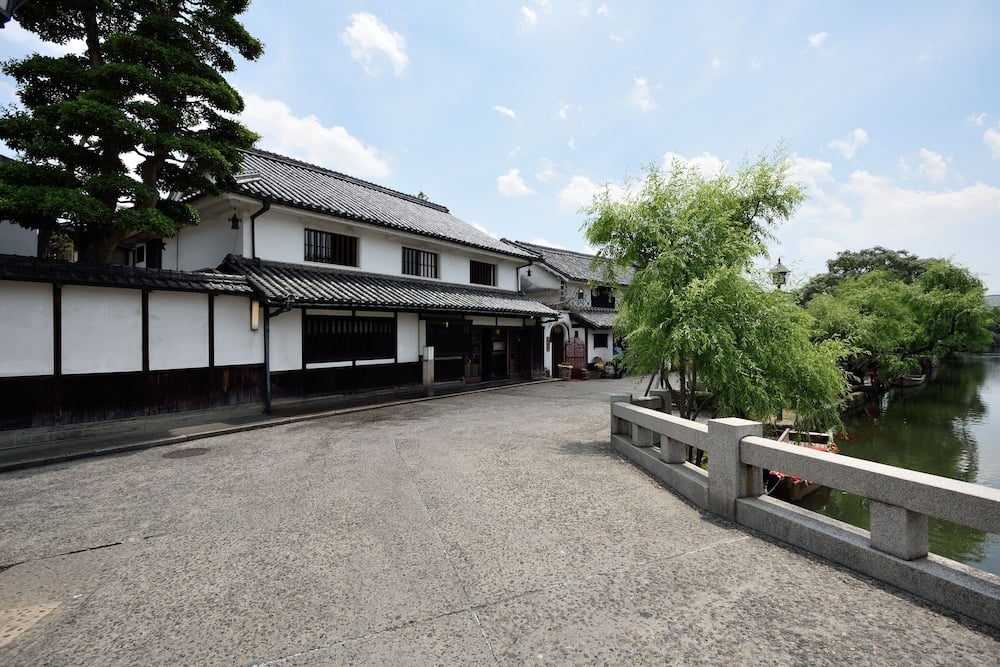
The white-walled storehouses of the Bikan Historical Quarter have stood along these canals for centuries, their dark-tiled roofs and latticed windows a study in Edo-era restraint. Ryokan Kurashiki occupies several of these converted kura and merchant buildings, its entrance tucked quietly along the willow-lined waterway as though the inn were simply another chapter in the neighborhood's long memory. Step inside and the atmosphere shifts immediately. Wooden beams, low ceilings, and carefully aged surfaces create a stillness that feels both deliberate and deeply lived in. This is not a recreation of tradition. It is tradition itself, adapted just enough to receive you.
The guest rooms draw from the architecture of the original structures, each one shaped by the idiosyncrasies of the buildings they inhabit. Tatami flooring, futon bedding, shoji screens, and alcove displays ground each room in the conventions of the ryokan form, while the thick plaster walls and heavy timber frames of the old storehouses lend a weight and quiet that newer construction cannot replicate. Some rooms look out over an interior garden, its arrangement of stone, moss, and carefully placed greenery offering a measure of contemplation between the day's excursions. The scale is intimate, with only a handful of rooms ensuring the experience remains personal and unhurried.
Dining at Ryokan Kurashiki follows the kaiseki tradition, a procession of seasonal courses presented with the precision and restraint the form demands. Meals are served in a space that feels of a piece with the rest of the inn, where dark wood and soft light set a tone that lets the food speak. Local ingredients and regional preparations anchor the menu, and the progression of dishes unfolds with the kind of quiet ceremony that makes the meal itself a defining moment of the stay. Breakfast, too, is a traditional Japanese affair, each element arranged with care.
The inn sits at the heart of the Bikan Historical Quarter, where former rice granaries and trading houses have been repurposed as galleries, craft shops, and small museums. The Ohara Museum of Art, one of Japan's first museums of Western art, is steps away along the canal. The neighborhood rewards slow walking, its narrow lanes opening onto courtyards and workshops where local artisans continue traditions in textiles, ceramics, and lacquerware. Kurashiki's canal district feels remarkably intact, its preservation neither precious nor performative but simply the result of a town that chose to keep what it had rather than replace it.
Ryokan Kurashiki does not announce itself. It absorbs you into a rhythm that predates modern hospitality, where the creak of aged floorboards and the filtered light through paper screens set the terms of your attention. What stays with you is not any single gesture but the accumulation of small, considered details, the sense that every surface has been touched by time and tended with patience.