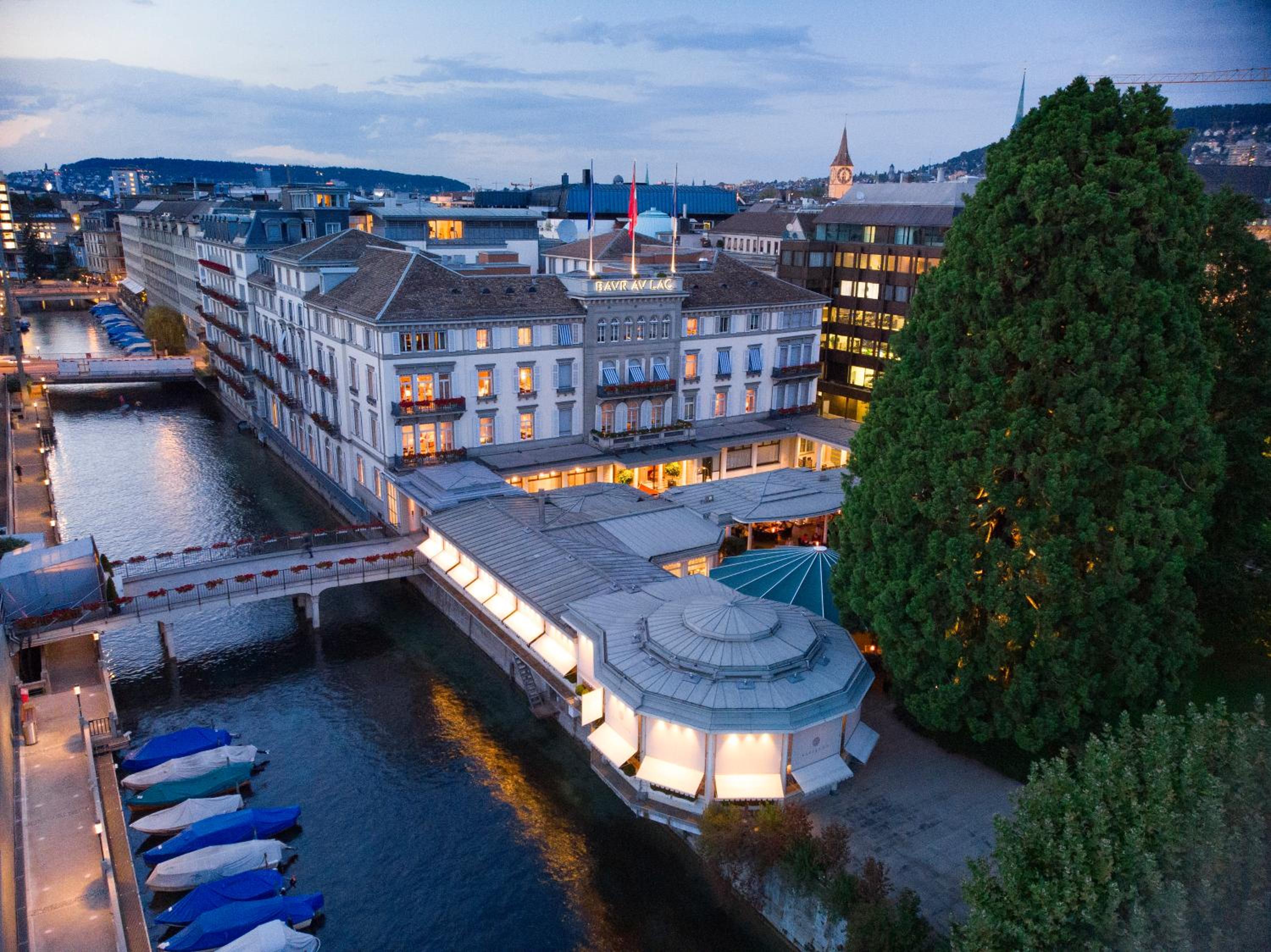
The approach alone sets the tone. A private park, mature and deeply green, opens between the bustle of Bahnhofstrasse and the still surface of Lake Zürich. Beyond the canopy of old trees, a neoclassical façade presents itself with the kind of understatement that only generations of confidence can produce. Baur Au Lac has stood on this ground since 1844, family-owned across six generations, its presence woven so deeply into the cultural fabric of Zürich that the city is almost unimaginable without it. This is not a hotel trading on heritage alone. It is a property that has remained vital precisely because it refuses to stand still.
The rooms and suites reflect that philosophy. Interiors vary across classical and contemporary registers, many offering views over the private park, the lake, or the Alps beyond. Fabrics are rich without excess, proportions generous, and finishes deliberate. Several suites occupy singular positions within the building, their layouts shaped by decades of thoughtful renovation rather than wholesale redesign. The effect is one of layered permanence, where modern comforts exist within rooms that carry the memory of their original architecture.
Dining at Baur Au Lac operates across several distinct registers. Pavillon, the hotel's fine dining restaurant, is a destination in its own right, its glass-walled conservatory extending into the park with a menu rooted in French culinary tradition and seasonal precision. Rive Gauche offers a more convivial counterpoint, serving brasserie-style dishes in an atmosphere that draws Zürich locals as readily as hotel guests. For lighter moments, the hotel's terrace becomes a gathering point in warmer months, overlooking the gardens and the water. The Bar at Baur Au Lac rounds out the evening with cocktails and a sense of occasion that feels earned rather than manufactured.
The property's park is not merely decorative. It functions as a genuine buffer between the hotel and the city, creating a microclimate of calm that belies the fact that Zürich's commercial and cultural center lies just steps away. The opera house, the art galleries along Rämistrasse, the boutiques of Bahnhofstrasse, and the lake itself are all within immediate reach. Yet the hotel's orientation, set back within its own green boundaries, means that arriving here feels like an act of deliberate withdrawal.
What lingers is not grandeur but proportion. Baur Au Lac understands the difference between formality and stiffness, between tradition and nostalgia. Service moves with a precision that suggests deep institutional memory, and the overall rhythm of the hotel encourages a kind of unhurried presence. Mornings unfold slowly here. Evenings carry the particular warmth of a place that has hosted countless arrivals and departures without ever losing its composure. It is the rare hotel where legacy feels like a living thing rather than a display.