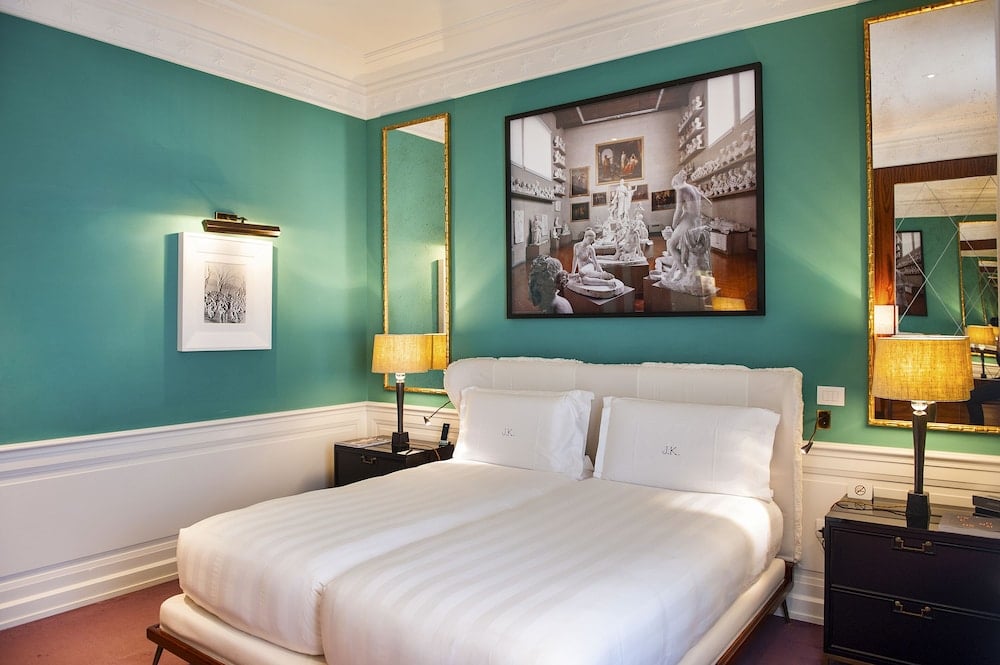
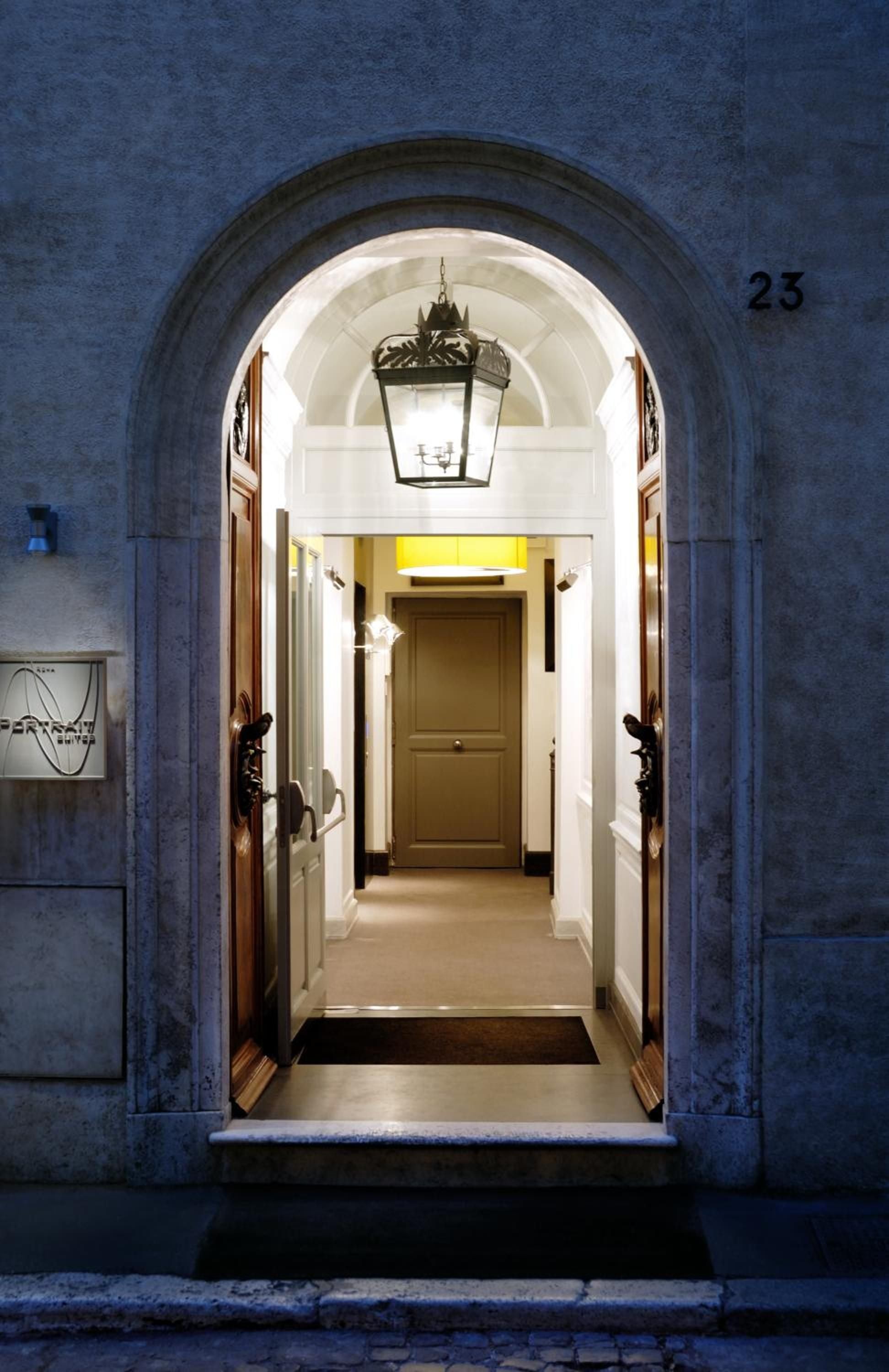
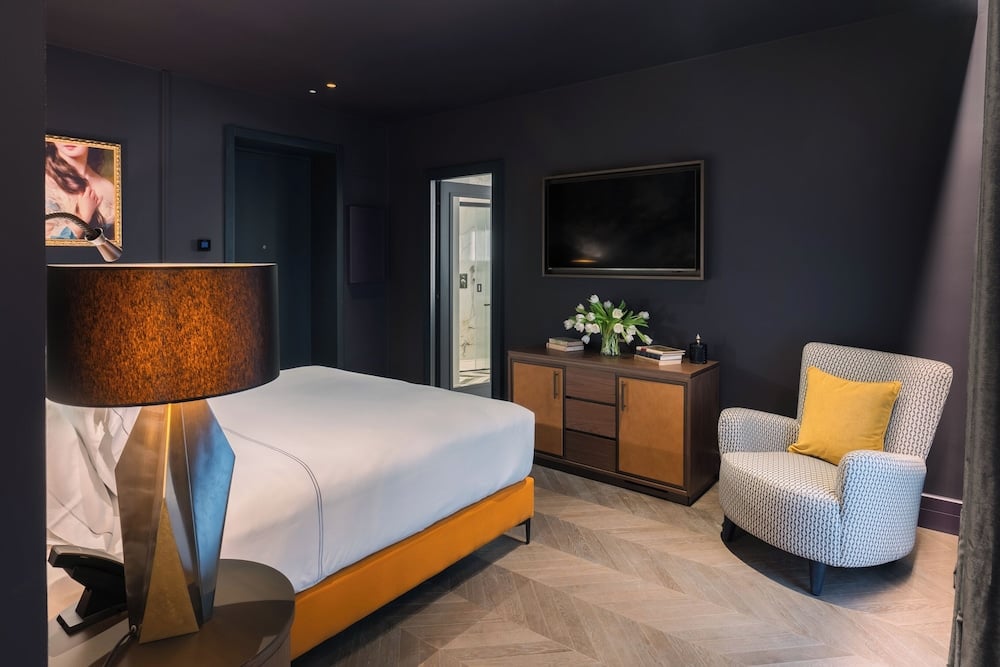
There is no signage to speak of, no lobby in the conventional sense. J.K. Place Roma opens instead like a private residence on Via di Monte d'Oro, just steps from Piazza di Spagna, where a doorman greets you as though you are expected for dinner rather than checking in. The interiors unfold with the layered confidence of a collector's home: antique furniture alongside contemporary art, velvet and marble in conversation, bookshelves that feel genuinely curated rather than staged. Architect Michele Bönan designed the property as an extension of the J.K. Place sensibility, one where intimate scale and decorative richness take precedence over any attempt at minimalism. Each of the thirty rooms is individually appointed, blending period details with modern comfort. Suites feel generous without sprawling, dressed in rich fabrics and warm palettes that echo the ochre and terracotta tones of the surrounding neighborhood.
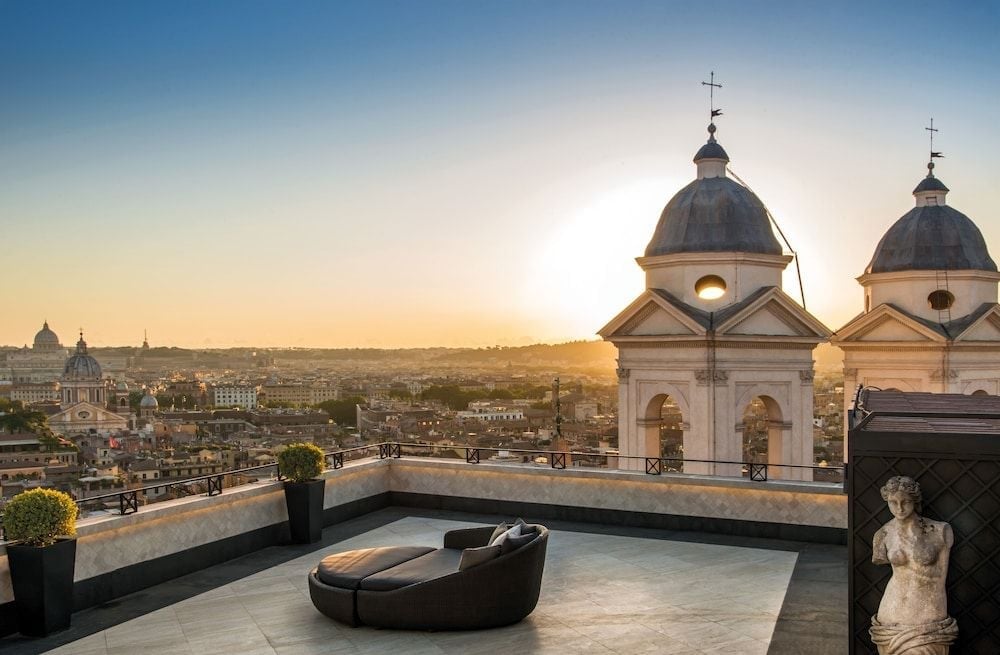
The ground floor draws guests toward J.K. Café, a refined all-day space that serves as both the social heart of the hotel and a destination in its own right. Mornings bring an Italian breakfast of pastries and espresso in porcelain cups; by evening, the mood shifts toward aperitivo and candlelight. The intimate J.K. Lounge, furnished with deep sofas and low tables, invites the kind of lingering that rarely happens in hotels of this size. There is also a rooftop terrace, a rare privilege in central Rome, where the skyline reveals itself across domes and bell towers. It is the sort of space that rewards a late afternoon glass of Franciacorta or a quiet morning coffee before the city fully wakes.
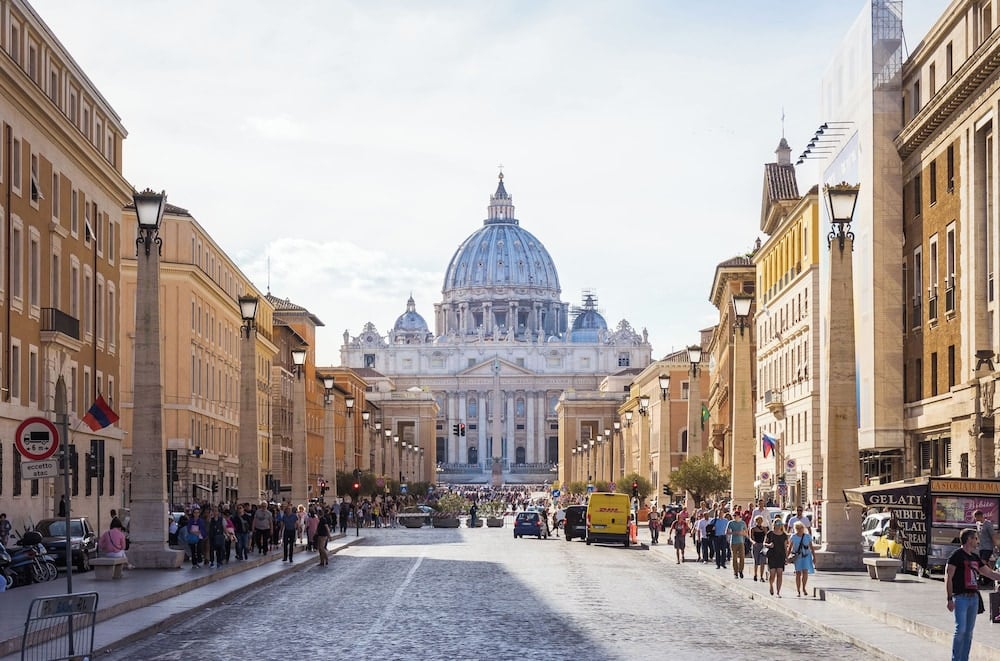
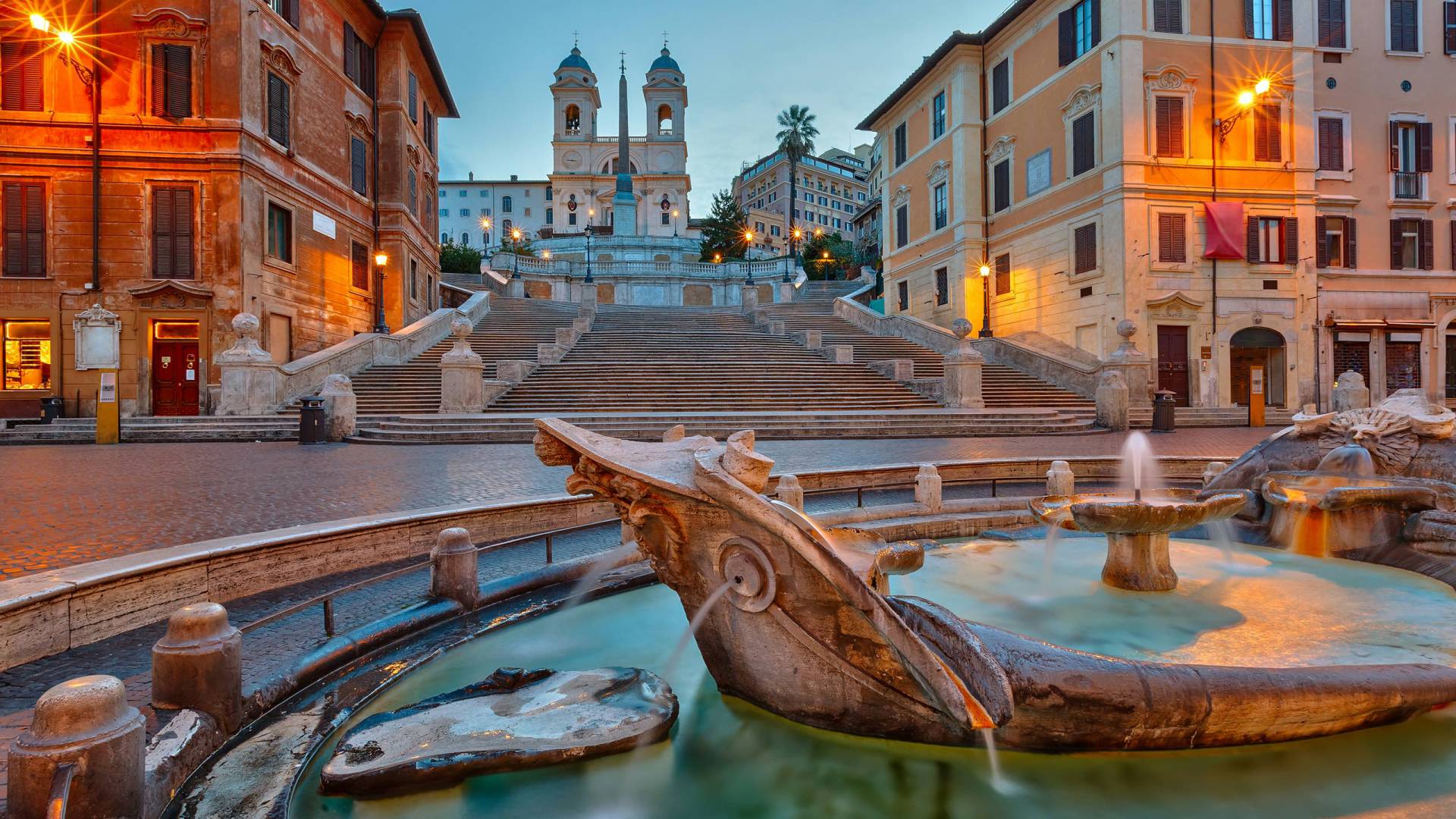
The property's position in Rome's historic center places it within walking distance of the Spanish Steps, the Pantheon, Via Condotti, and the Tiber. Yet the immediate surroundings feel residential and unhurried, a neighborhood of artisan shops and small trattorias that has resisted the louder rhythms of mass tourism. J.K. Place Roma benefits from this duality. You are never far from the monumental landmarks that define the city, but the return to the hotel each evening feels like stepping off the stage and into someone's beautifully kept sitting room.
What lingers is the proportion of things. Thirty rooms, one café, a rooftop, a lounge. Nothing competes for attention; nothing tries to be more than what it is. The result is a stay that mirrors the best version of Rome itself: unhurried, deeply considered, and more personal than you expected it to be.