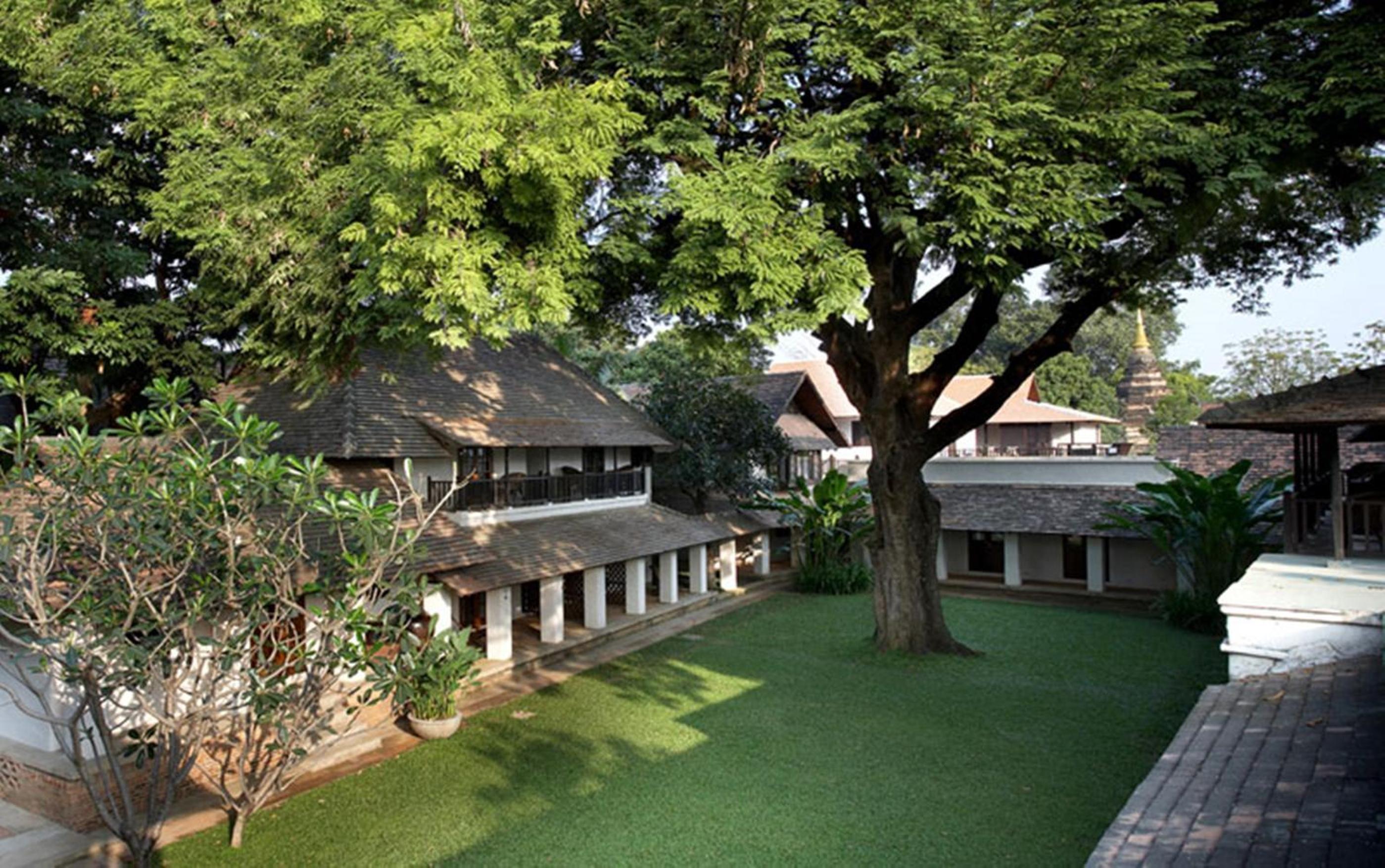
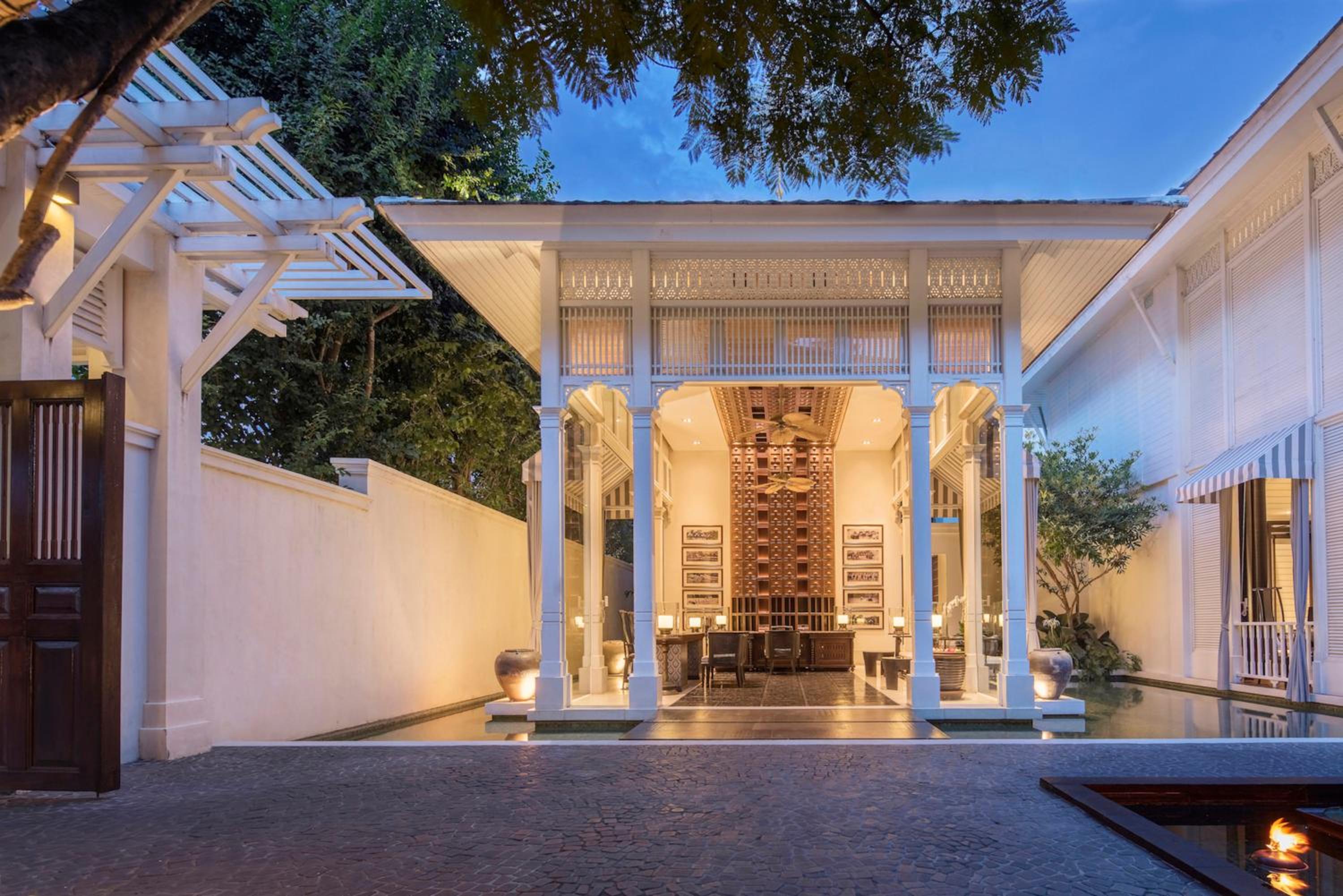
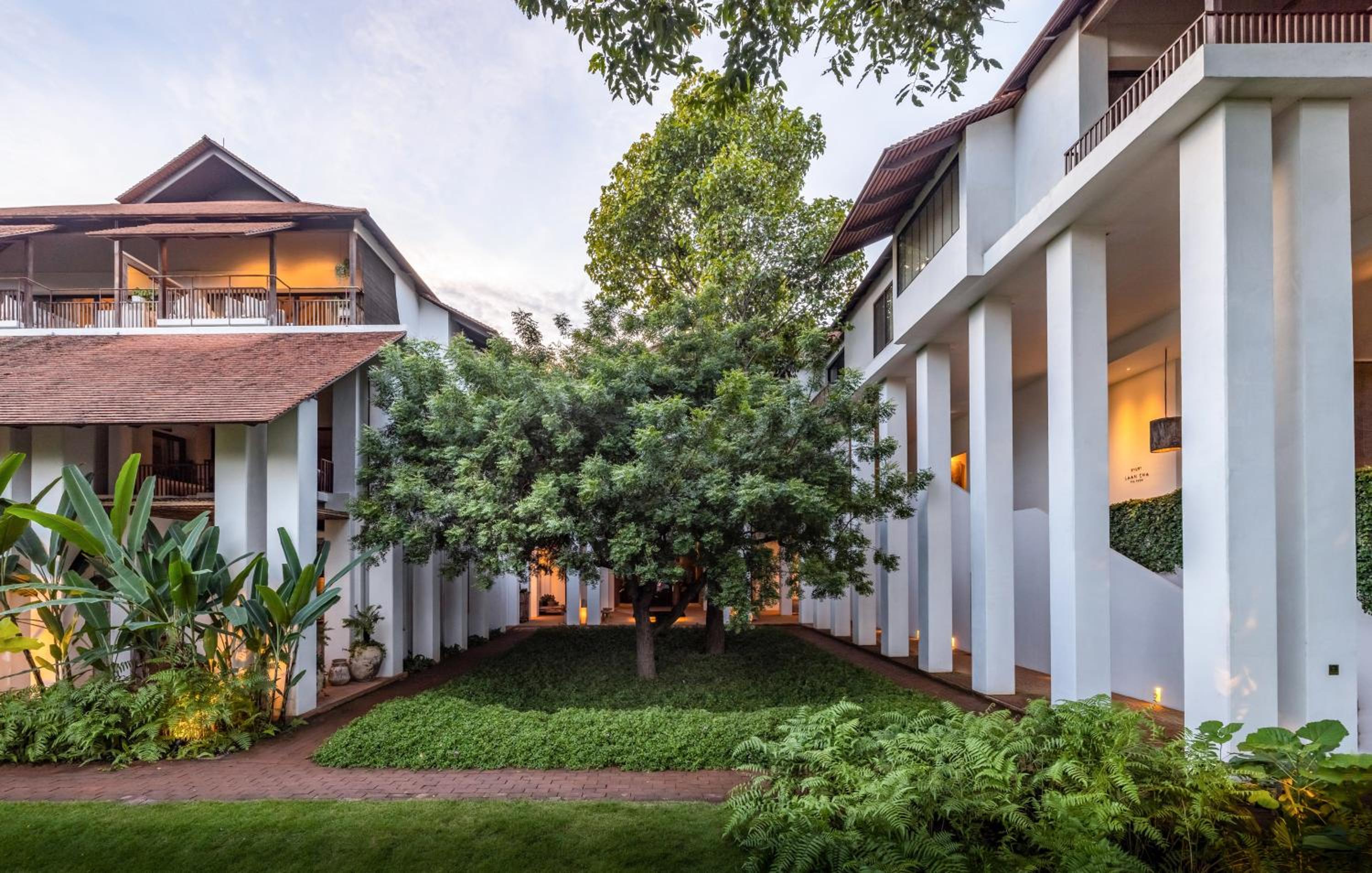
A narrow lane off Ratchadamnoen Road leads to a wooden gate, and beyond it, a world that moves at a different pace. Tamarind Village occupies a full city block within the walls of Chiang Mai's old city, its low-slung buildings arranged around a central courtyard where a centuries-old tamarind tree anchors everything in place. The architecture draws from traditional Lanna design, with dark timber, pitched rooflines, and shaded colonnades that channel the breeze. Colonial and village vernaculars merge here without competing, and the result is a hotel that feels less like a constructed retreat and more like a compound that has belonged to this particular stretch of earth for generations.
Forty-six rooms are spread across the grounds, each designed with teak furnishings, handwoven textiles, and clean lines that honor northern Thai craftsmanship. Categories range from intimate Lanna rooms facing interior gardens to spacious suites with private terraces overlooking the courtyard. The palette stays restrained throughout, with dark woods set against white walls, allowing natural light and greenery to do the decorative work. There is a quiet confidence to the interiors, a sense that nothing here was chosen for effect alone.
The hotel's restaurant, Ruen Tamarind, occupies an open-air pavilion beneath the property's signature tree, serving northern Thai and classic Thai dishes prepared with ingredients sourced from local markets. Breakfast here sets the rhythm of the day, with Chiang Mai's temple bells drifting over the courtyard wall. A small swimming pool, framed by tropical plantings and teak loungers, offers a cool reprieve from afternoon heat, while the on-site spa provides traditional Thai massage and herbal treatments rooted in regional wellness practices. A library lounge and gallery space add texture to the common areas, reflecting the property's genuine engagement with local art and culture.
Location is inseparable from the experience. Tamarind Village sits at the heart of the old walled city, within walking distance of Wat Phra Singh, Wat Chedi Luang, and the Sunday Walking Street market. The Night Bazaar, the Three Kings Monument, and the lanes of independent galleries and cafés that define this neighborhood are all reachable on foot. Chiang Mai's creative energy and devotional traditions exist side by side here, and the hotel serves as a natural base from which to encounter both.
What stays with you is the courtyard. The way the tamarind canopy filters the light. The way conversations lower to a murmur beneath its branches. Tamarind Village does not announce itself. It receives you, unhurried, as if you had always been expected.