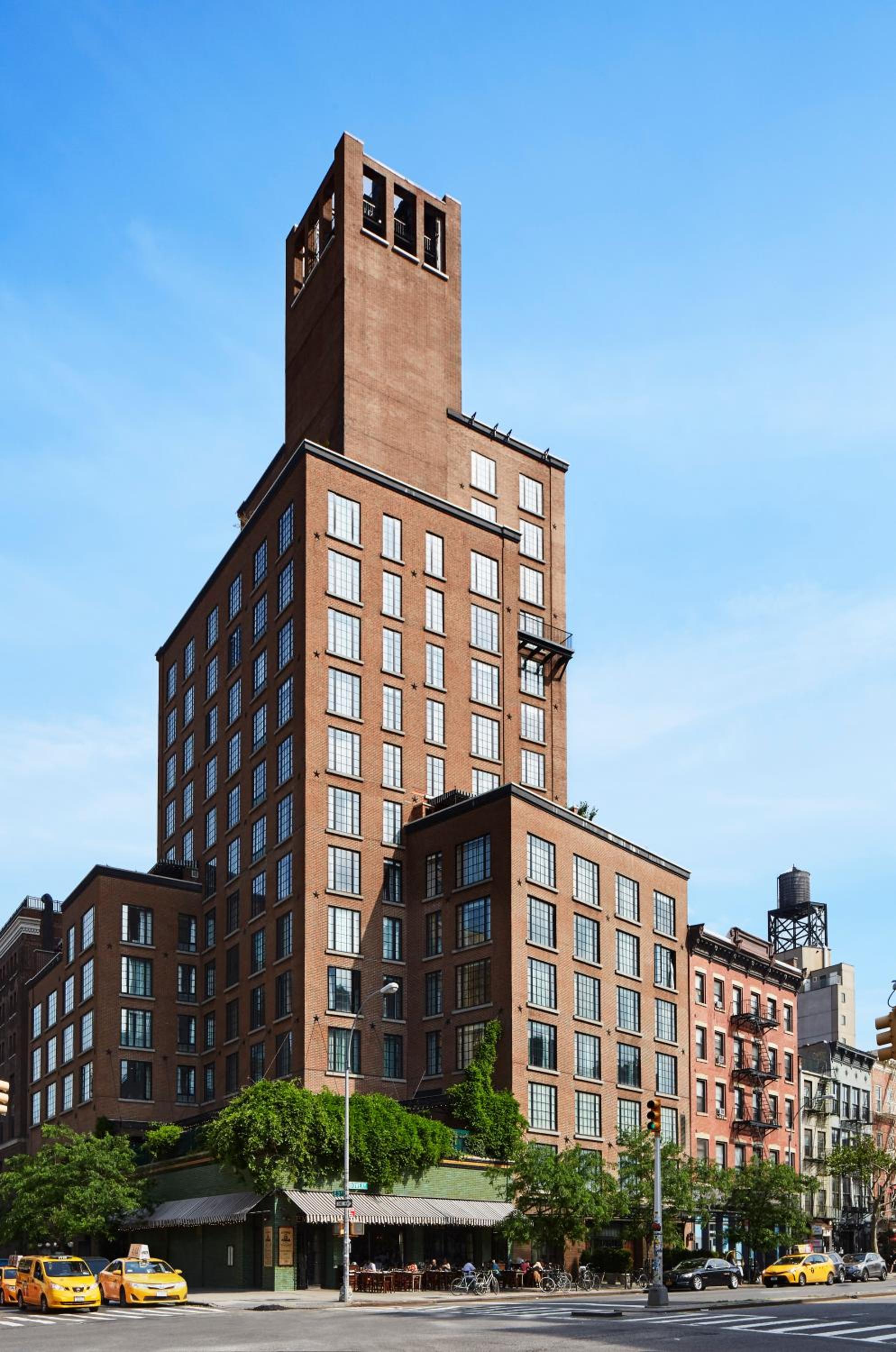
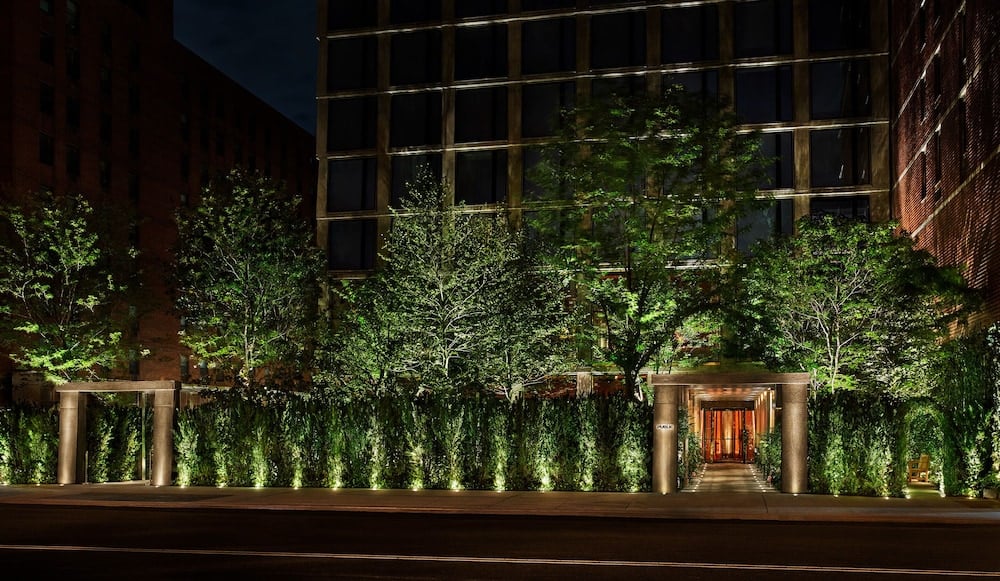
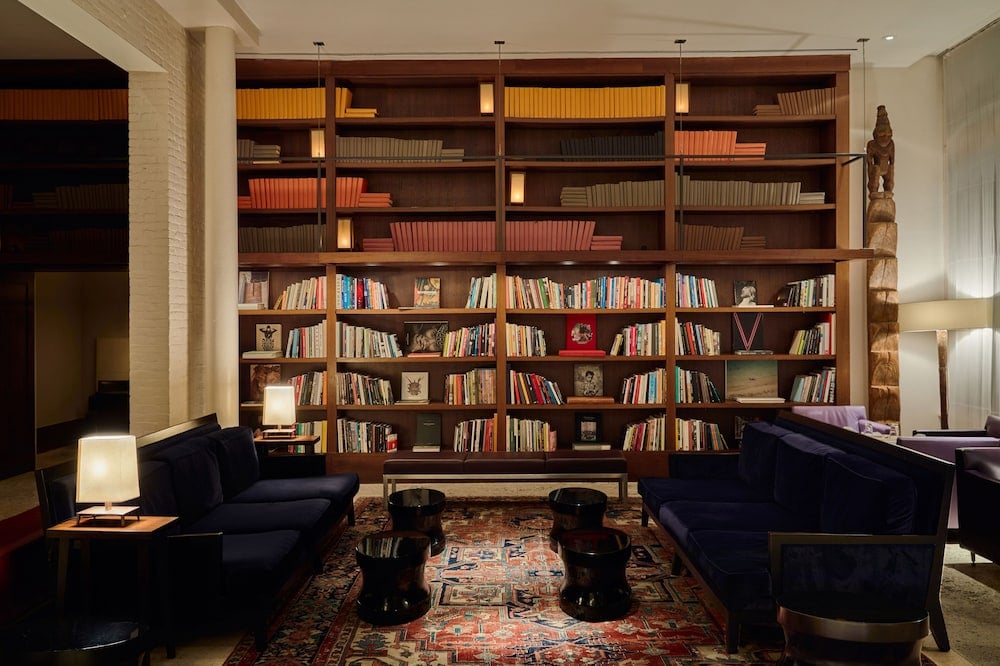
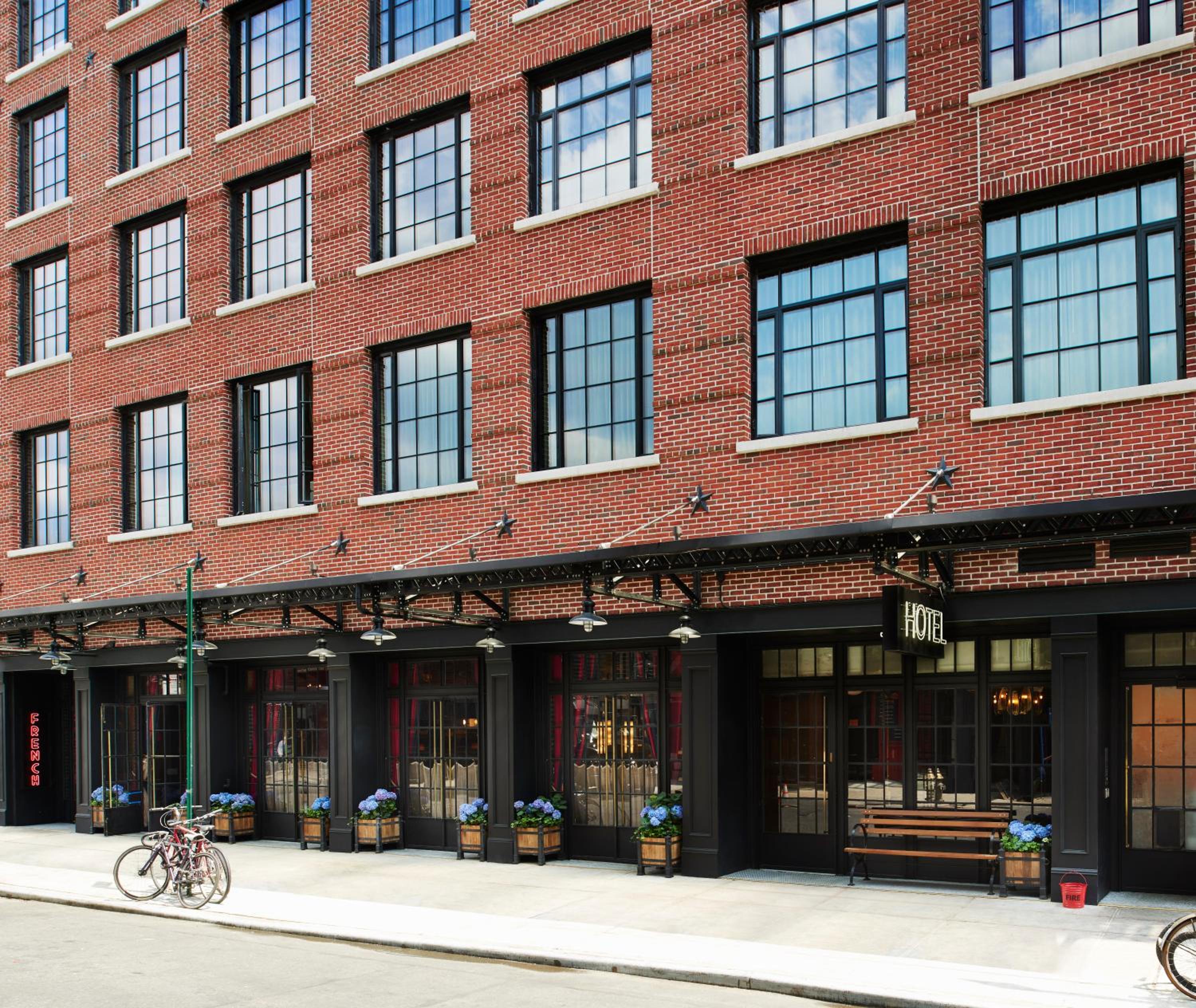
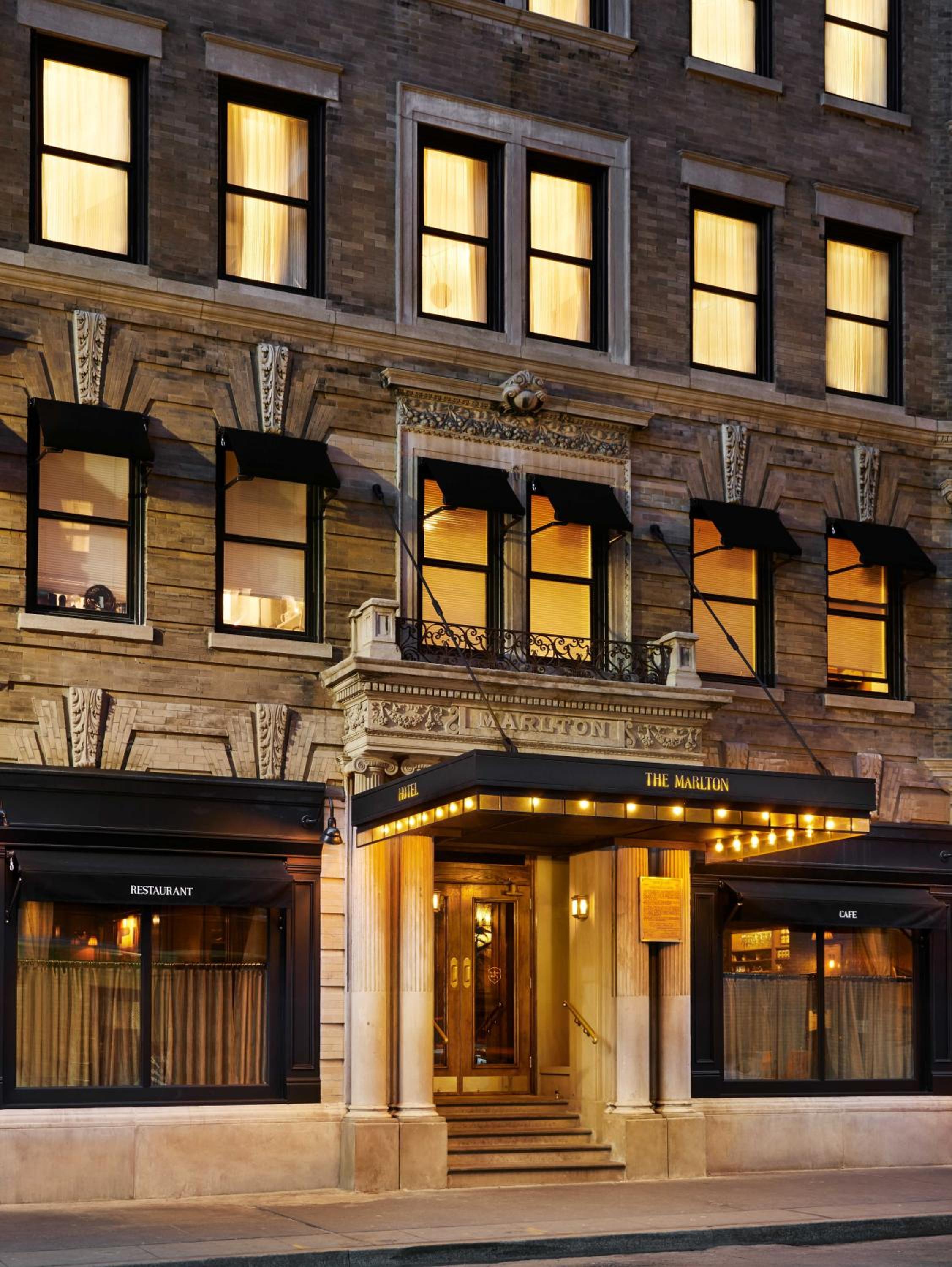
There is a particular gravity to arriving at The Bowery Hotel. The façade is industrial New York, brick and steel and the memory of a grittier era, but the moment the doors open, the interior pivots sharply toward another century entirely. The lobby is dim and layered, filled with Persian rugs, tufted velvet seating, heavy drapes, and fireplace light that flickers against dark wood paneling. It reads less like a hotel lobby and more like the living room of a well-traveled collector who never quite stopped acquiring beautiful things. This is not minimalism. This is not restraint. This is maximalist warmth, and it works because every object feels earned rather than staged.
The 135 rooms carry that same spirit upward. Exposed brick walls meet floor-to-ceiling factory-style windows that flood the spaces with natural light and frame views of the Manhattan skyline or the Bowery below. Bedding is crisp white against the rawness of the architecture. Marble bathrooms feel substantial and unhurried. Many rooms open onto small Juliet balconies, a rare luxury in a city where private outdoor space is treated like currency. The effect is a room that feels deeply New York in its bones but entirely removed from the noise and pace of the streets outside.
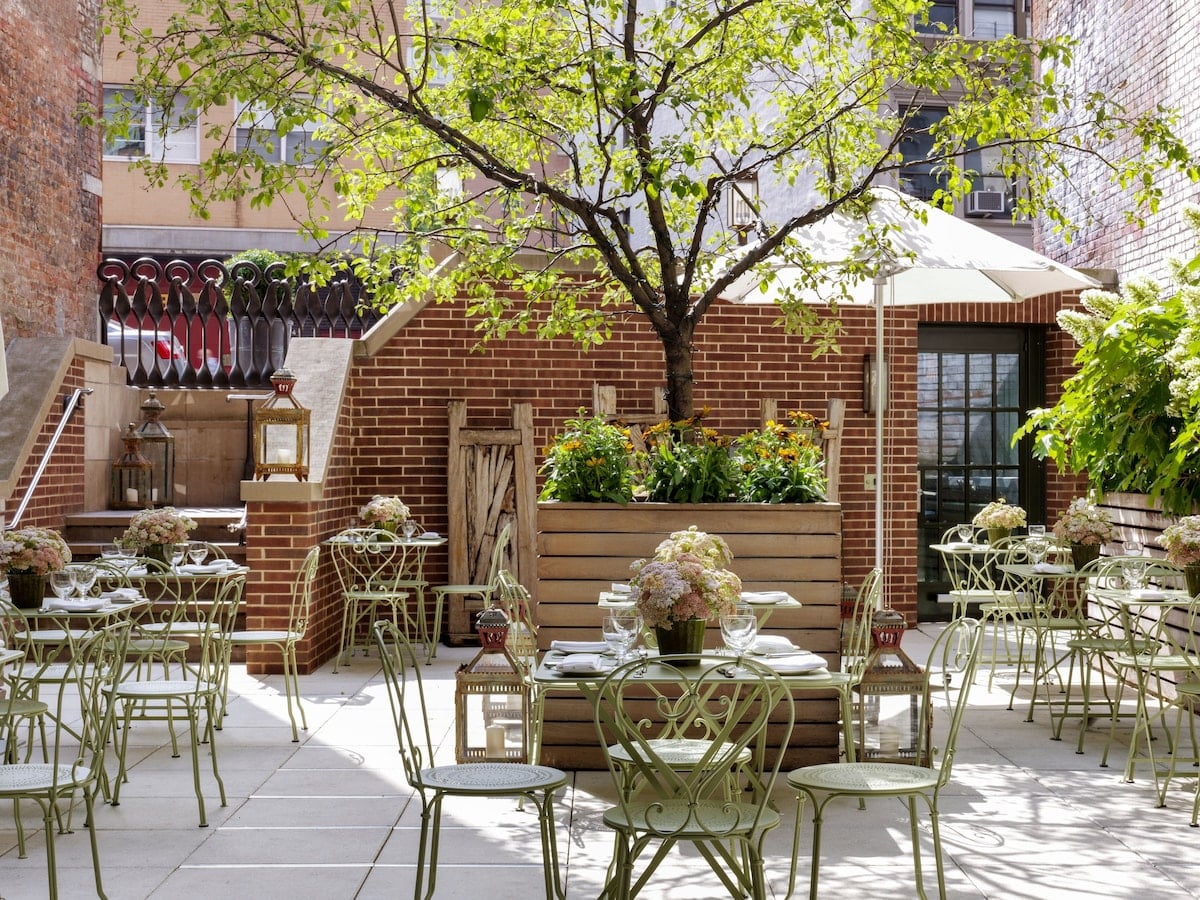
The ground floor anchors the social life of the property. Gemma, the hotel's Italian restaurant, occupies a sprawling space that opens onto one of the neighborhood's most coveted patios when the weather allows. The menu draws from a rustic Italian vocabulary, and the garden terrace, strung with lights and bordered by greenery, has become one of downtown Manhattan's most recognizable dining settings. The adjacent lobby bar operates as a gathering place in its own right, drawing hotel guests and locals alike into its low-lit, club-like atmosphere. It is the kind of bar where you settle in rather than pass through, where the cocktails are strong and the furniture encourages you to stay longer than planned.
The Bowery Hotel sits at the intersection of NoHo and the Lower East Side, a stretch of Manhattan where historic tenement architecture shares the block with contemporary galleries, independent restaurants, and some of the city's most storied music venues. The neighborhood's creative energy is inseparable from the hotel's identity. Walking out the front door places you within minutes of the New Museum, the boutiques of Bond Street, and the late-night culture of the East Village. It is a location that rewards wandering, and the hotel serves as a natural base for the kind of traveler who wants to experience New York at street level rather than from a distance.
What lingers about The Bowery Hotel is the particular contrast it strikes. The building is unmistakably downtown, but the interiors belong to a slower, darker, more romantic world. It is a place that feels like a secret even though it has been part of the neighborhood's fabric for years, a hotel where the atmosphere never announces itself too loudly but is impossible to forget once you have spent a night inside it.